

Katsuhide Motoi
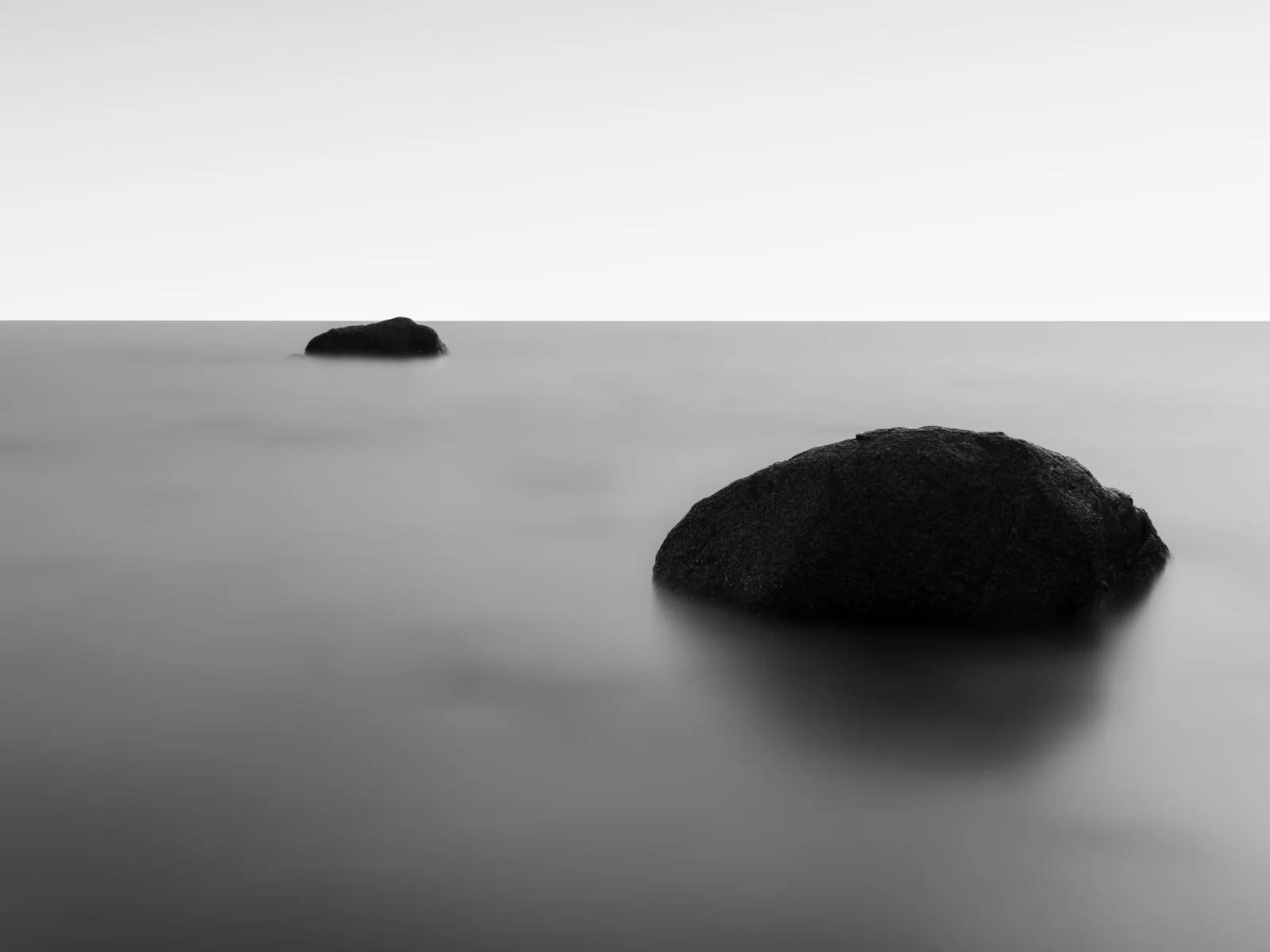
Title: The Void Shaper
The role of light is to illuminate existence and make it legible.
The role of the rock is to serve as a metaphor for weight, bearing the narrative of time.
When humans recognize existence, they rely on texture and tactile cues to grasp its meaning, function, and above all, its absolute quality—mass.
But I have used backlight to erase the texture of matter, obscuring the very clues through which we perceive being.
As a result, the role of the rock is stripped away, leaving only mass—presence without definition—adrift in a void as an empty shell.
This is a visualization of the disappearance of existence through light, an act of dismantling the meaning attached to being.
It ceases to be sky, to be sea, to be light, to be rock.
The landscape ceases to be landscape.
“The Void Shaper” is not a reconstruction of ontology, but a deconstruction.
If Jean-Paul Sartre claimed that “existence precedes essence,” then I ask:
When essence is gone, can factual existence still take form?
Landscape, once a “place” that carried meaning and narrative, is here reduced to absence.
What remains is merely the husk—meaningless, undifferentiated presence.
This is, in other words, the nirvana of landscape.