

Katsuhide Motoi
Title: The Void Shaper – Beyond the Landscape: Its End and Rebirth
This series explores the interaction of presence and absence by reconstructing the concept of Karesansui—the dry landscape garden—through photography.
Its conceptual origin draws from the spatial aesthetics of Tōhaku Hasegawa (1539–1610).
Photography typically functions as a medium that captures “presence.”
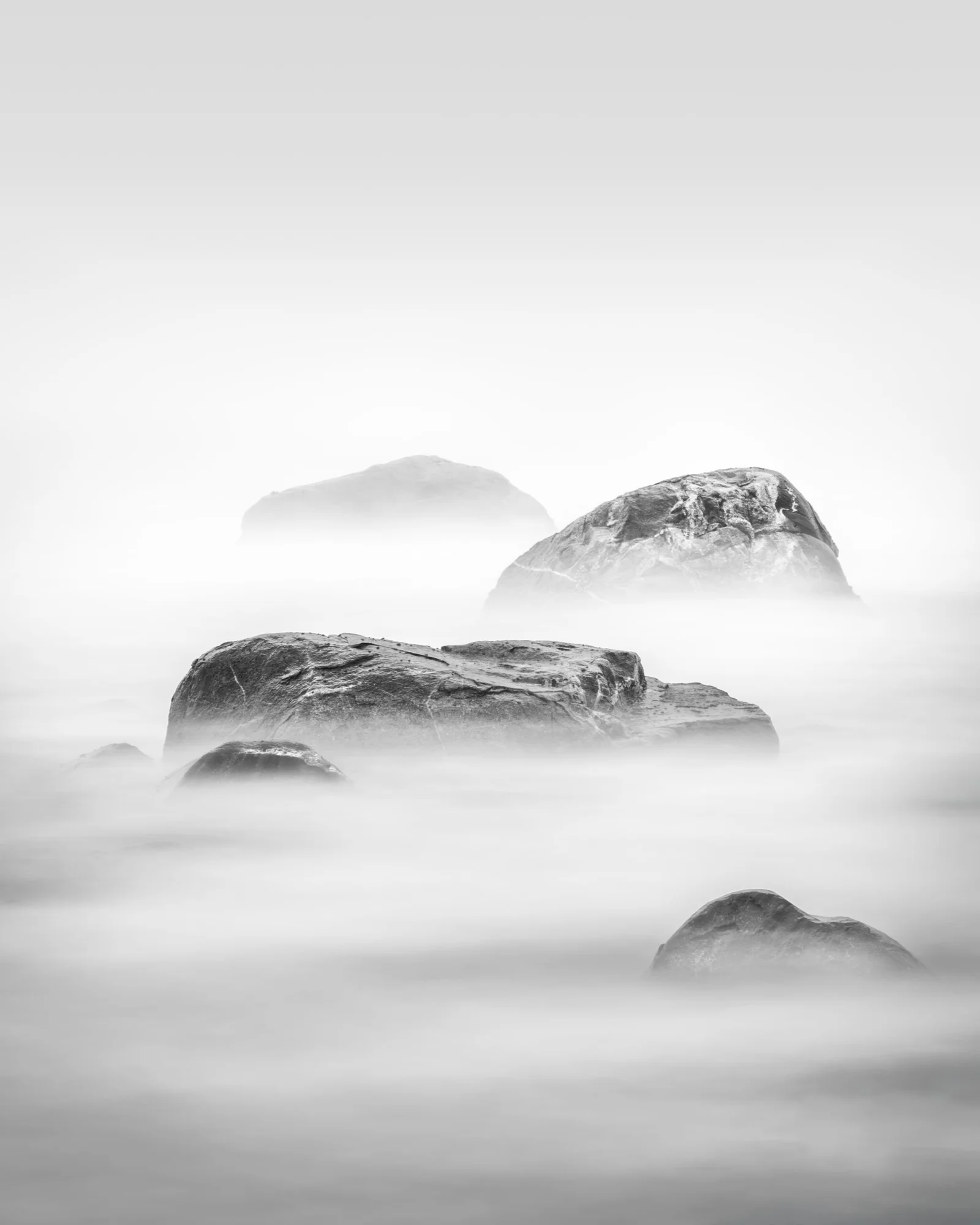
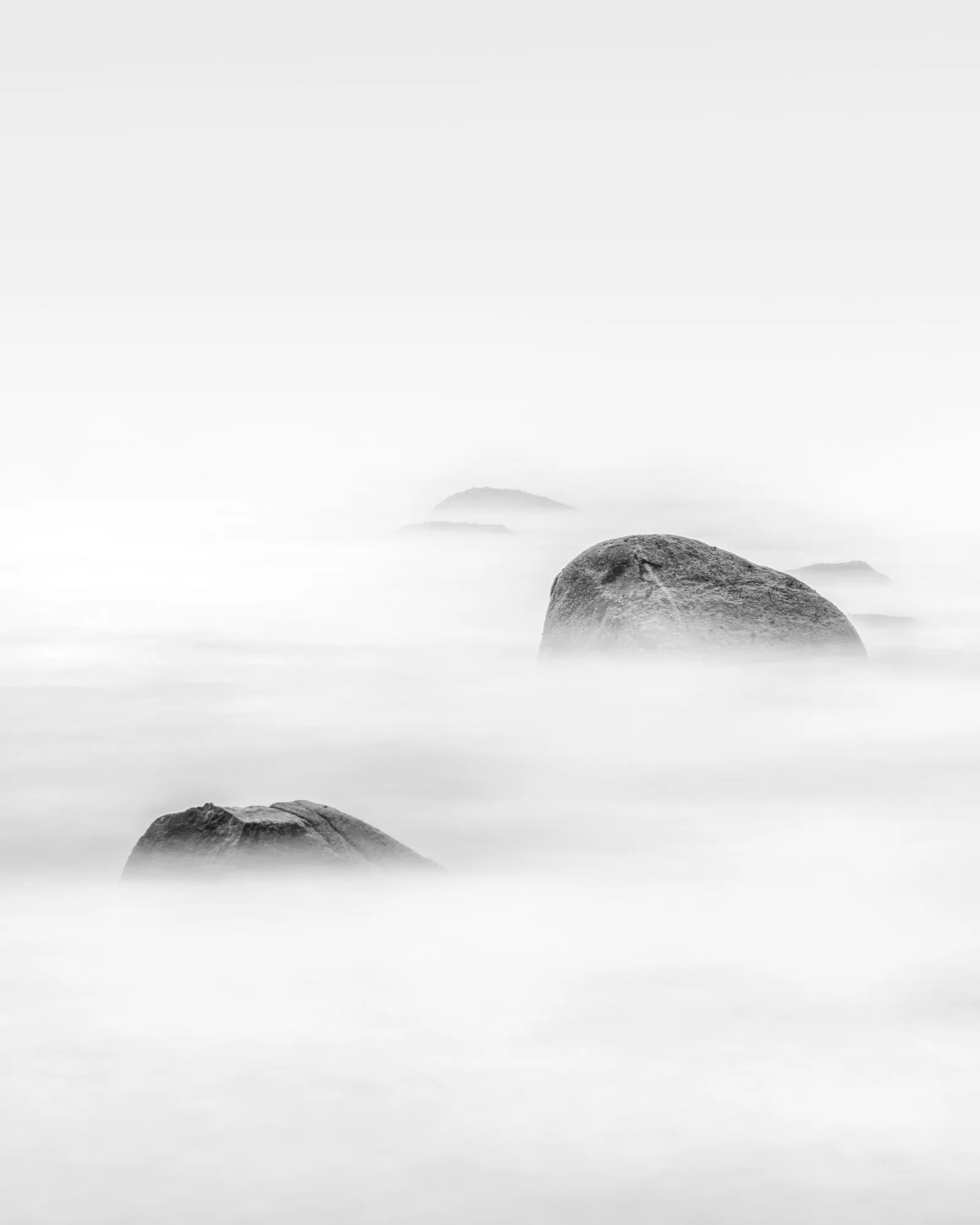
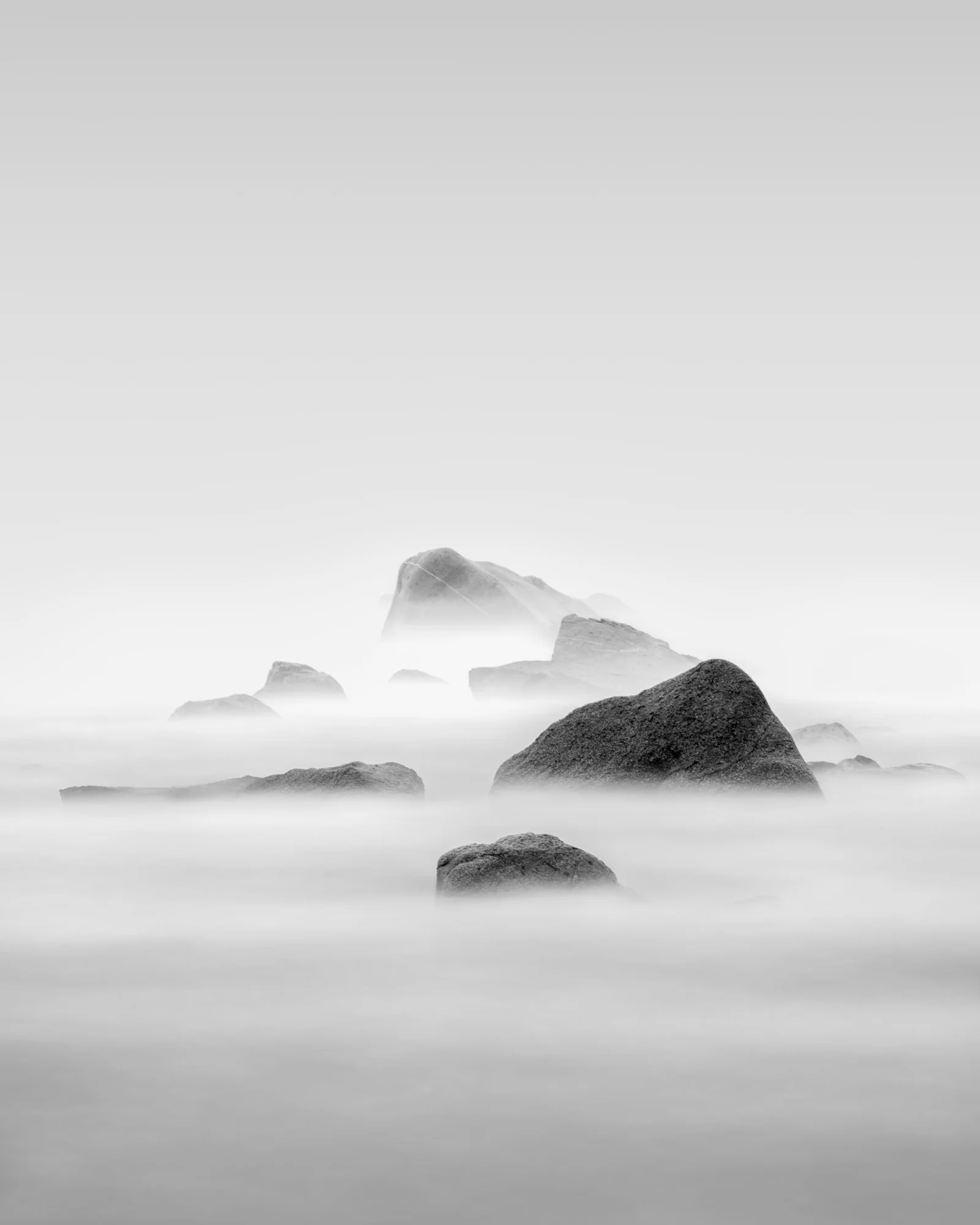
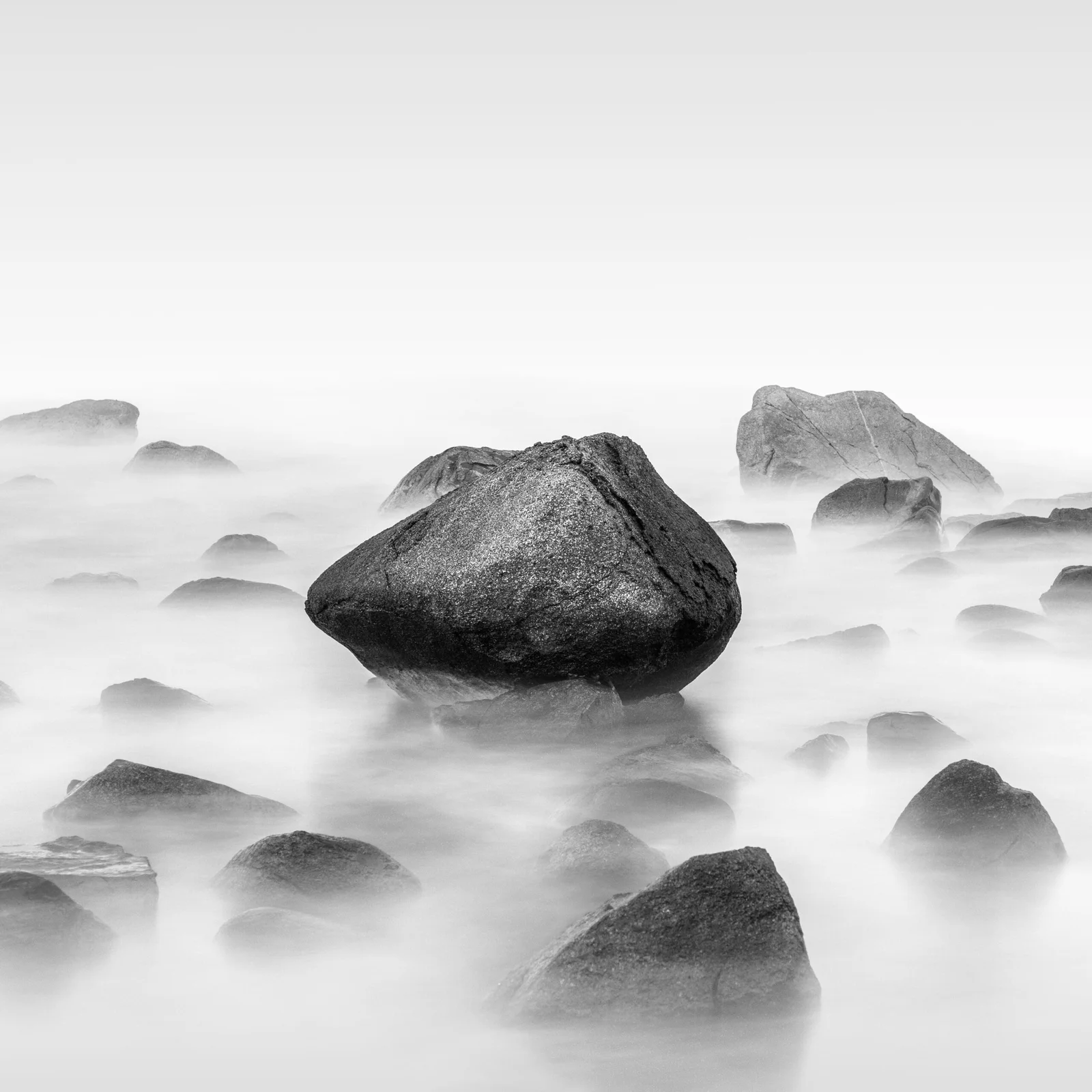
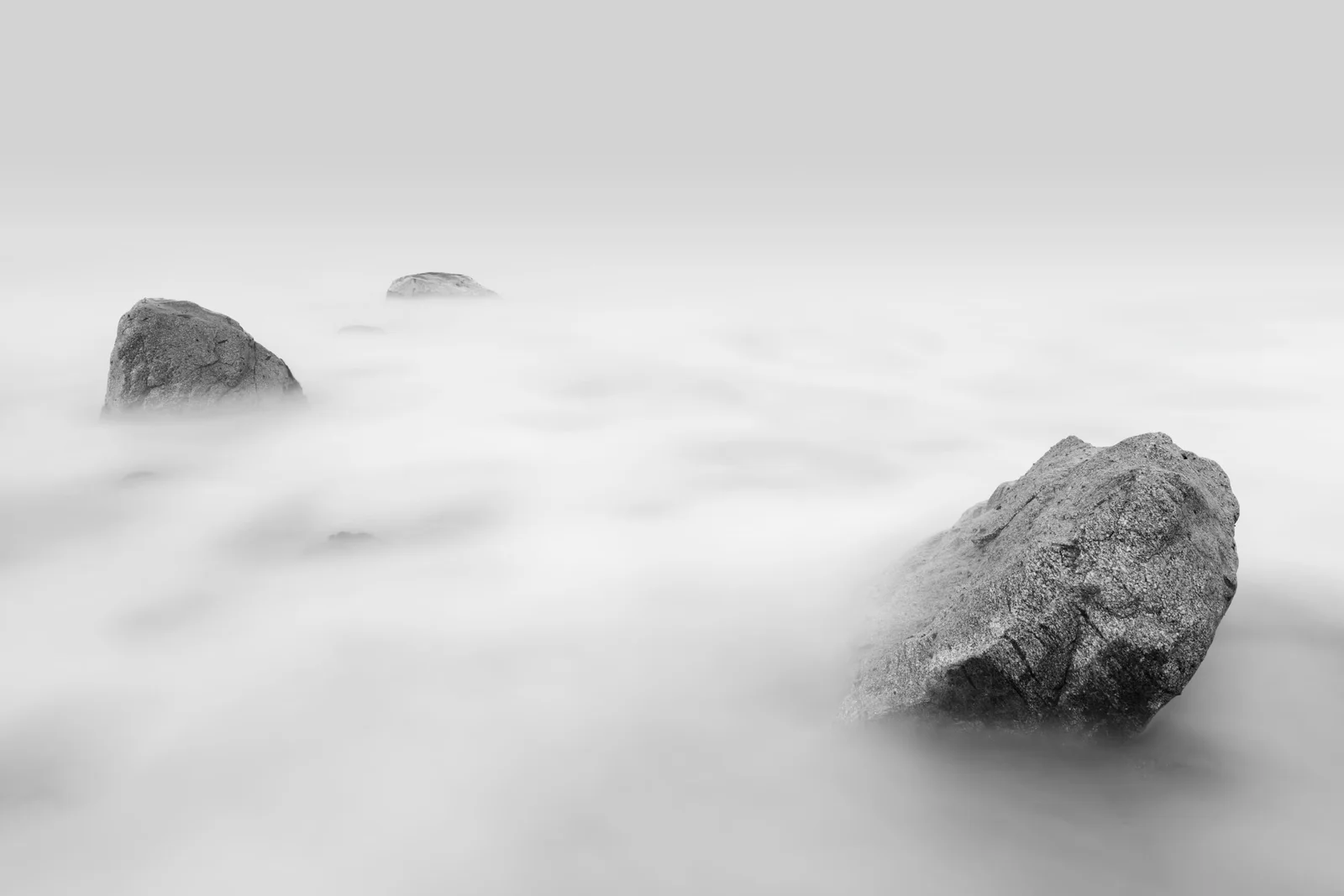
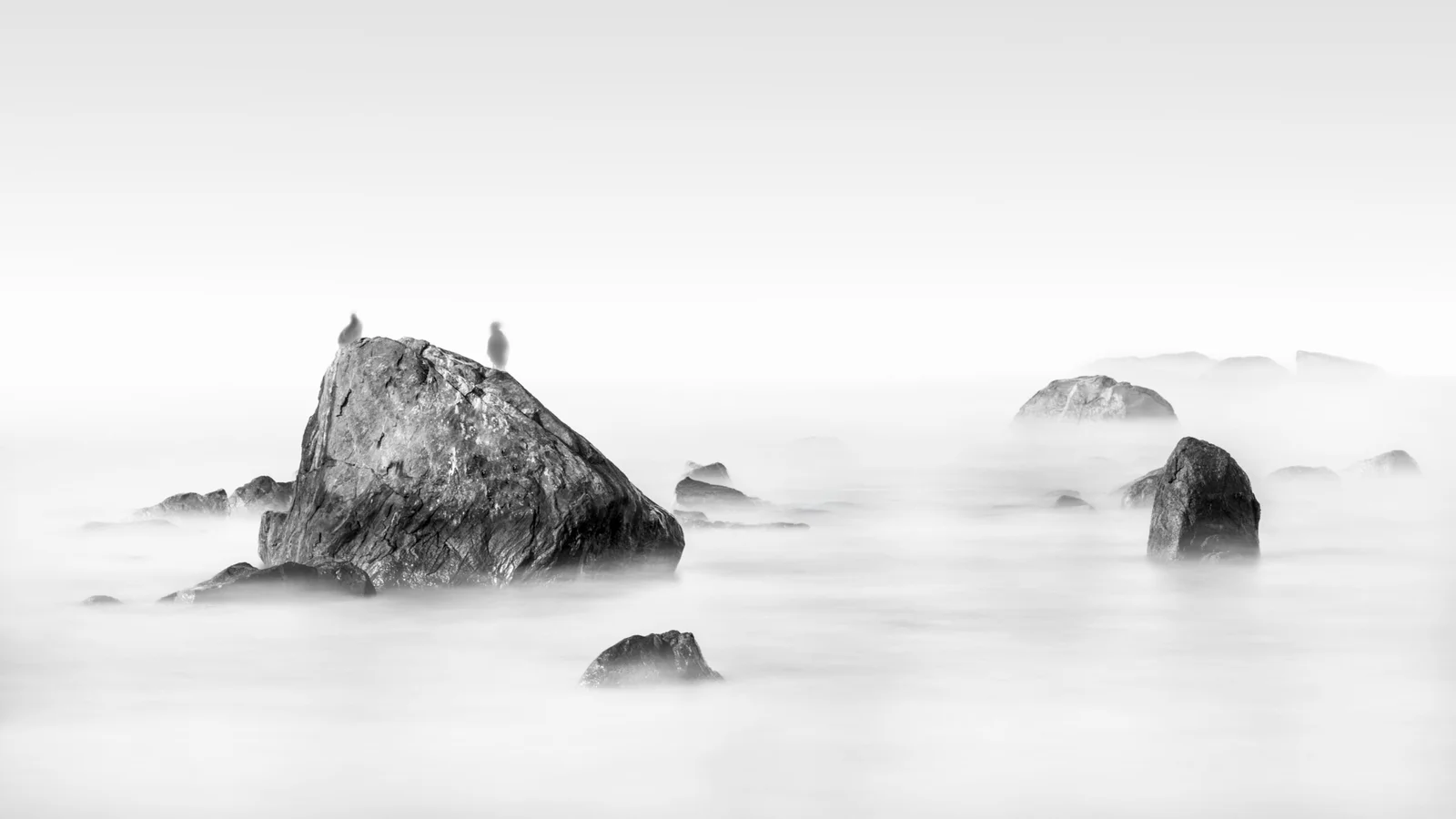
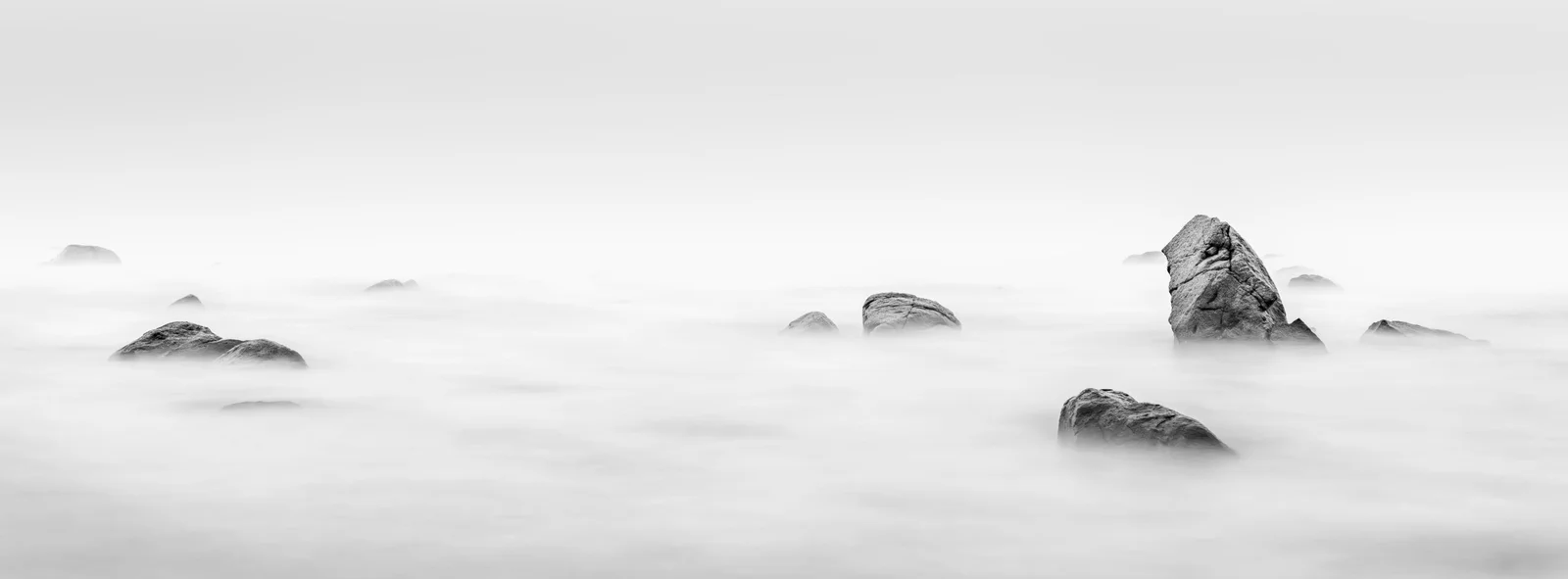
However, this series uses long exposure to depict the process of disappearance—photographing rocks continuously engulfed by waves, where objects lose their roles and meanings and return to a state of mere being.
Both wave and rock, immersed in the flow of time, persist in their attempt to remain.
As their outlines blur, it is not presence but disappearance itself that begins to take shape.
The object no longer is here—it exists only as it fades.
What is captured here is a “site” where mass, the only absolute quality of existence, begins to waver.
It is a liminal space where presence and absence drift—an “interval”, or awai, in Japanese thought.
Between what is still rock and what has already lost the meaning of being rock,
I aim to purify the object—stripping it of the weight of meaning.
The weight of meaning is the weight of existence.
What remains—what exactly is it?
Existence appears and disappears not as a matter of having or lacking substance, but as a state.
It is a phenomenon that arises only under the provisional name of a thing.
When its existential integrity begins to tremble, its contour quietly dissolves.
The proof and disappearance of existence are of equal value—and the fluctuation that arises in this threshold is the very essence of “emptiness” (空, kū) in Zen.
This series explores the interaction of presence and absence by reconstructing the concept of Karesansui—the dry landscape garden—through photography.
Its conceptual origin draws from the spatial aesthetics of Tōhaku Hasegawa (1539–1610).
Tōhaku painted pines fading into mist.
I photograph stones that have already disappeared.